

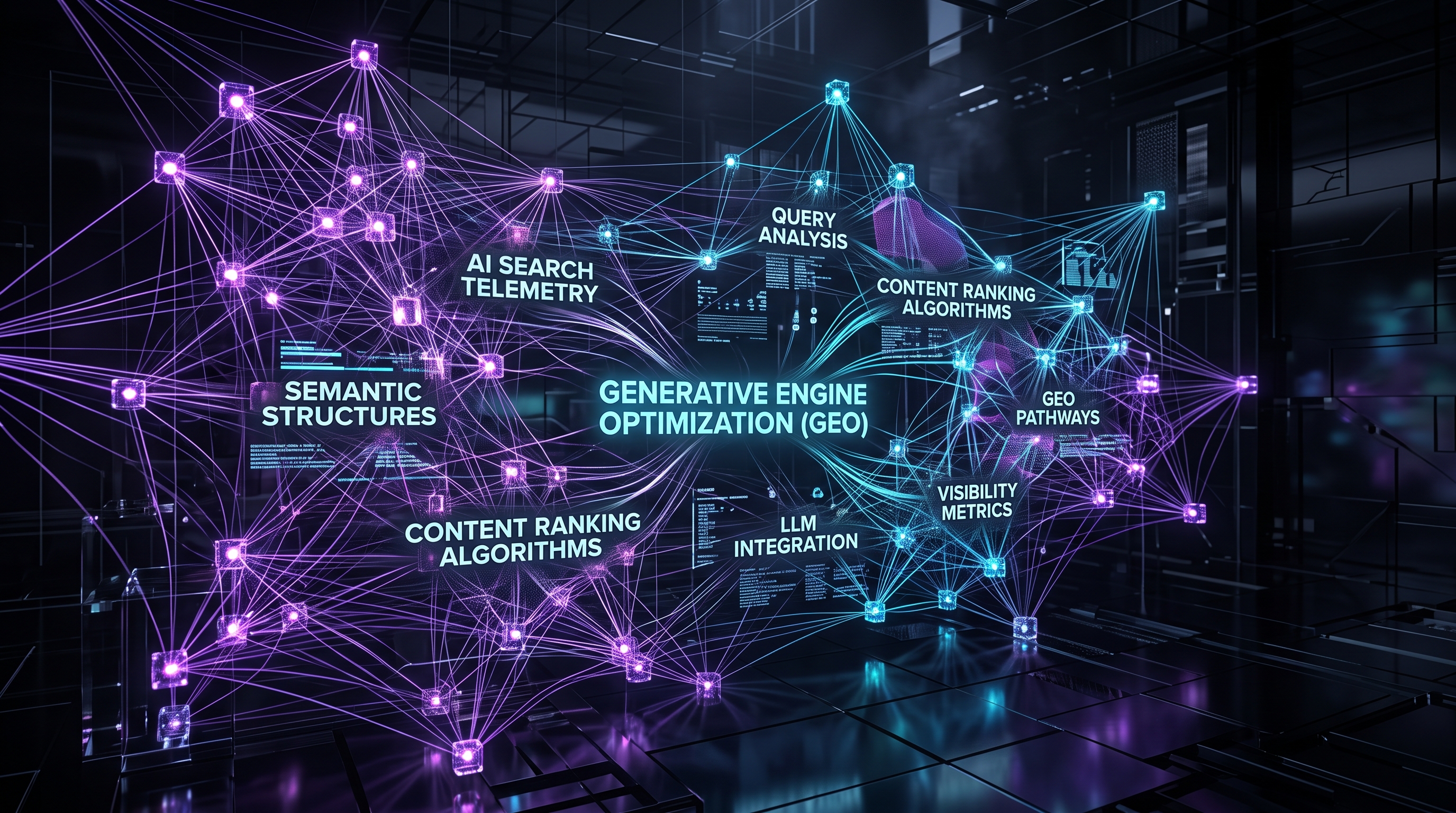
For over two decades, search engine optimization (SEO) operated on a reliable, mechanical model: conduct keyword research, place target phrases inside HTML meta tags, construct high-authority backlinks, and capture user clicks from traditional ten-blue-link SERPs. In 2026, that paradigm has fundamentally collapsed.
With the widespread integration of AI-driven synthesis engines—including SearchGPT, Google AI Overviews, and conversational agent interfaces—users are no longer clicking through multi-link SERP pages. Instead, large language models (LLMs) extract, synthesize, and present definitive direct answers directly inside the interface.
"Traditional SEO optimized for link matching. Generative Engine Optimization (GEO) optimizes for LLM inclusion, entity validation, and conversational synthesis."
The Paradigm Shift: Traditional SEO vs. GEO
To understand why your organic traffic channels may be experiencing stagnation despite ranking in position 1–3, we must analyze the architectural differences between traditional crawler indexing and generative AI engine retrieval:
| Vector Metric | Traditional Keyword SEO | Generative Engine Optimization (GEO) |
|---|---|---|
| Target Mechanism | Keyword Frequency & Exact Matches | Entity Knowledge Graph & Vector Proximity |
| Primary User Goal | SERP Click-Through Rate (CTR) | AI Engine Citation & Direct Recommendation |
| Content Evaluation | On-Page Headings & Link Popularity | Information Density, Quotes & Statistical Authority |
| Technical Core | Crawl Budget & URL Indexing | Semantic JSON-LD & Structured Schema Embeddings |
Pillar 1: Entity Profiling over Keyword Density
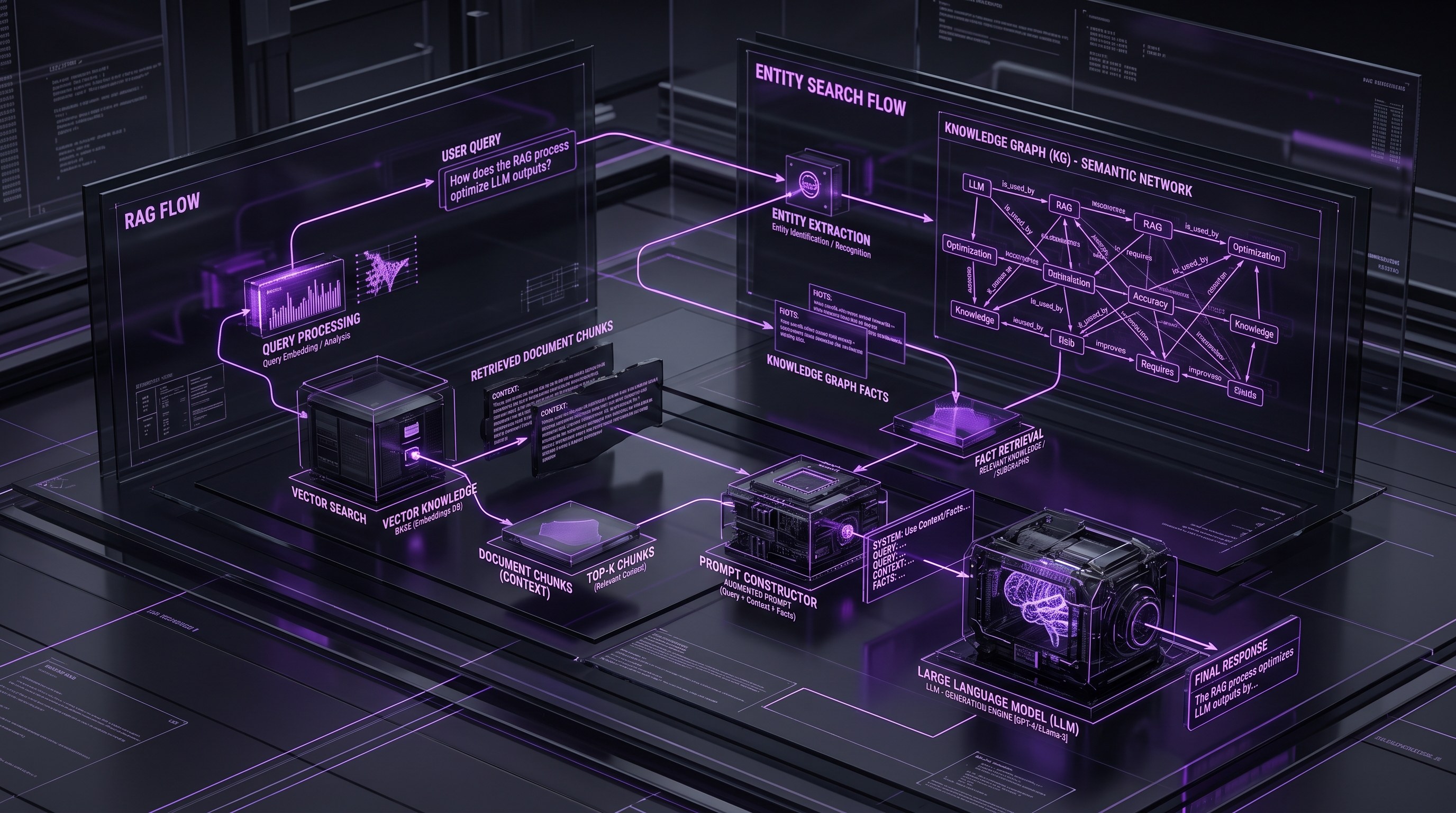
LLMs do not parse web documents as isolated HTML files; they treat content as nodes inside an interconnected Knowledge Graph. When an enterprise brand is cited in an AI Overview, the model evaluates entity confidence scores based on cross-platform verification.
To establish enterprise entity authority, your digital infrastructure must incorporate precise JSON-LD Schema data defining key organization entities, executive leadership, and verified service credentials.
Pillar 2: Conversational Indexing & Natural Intent Parsing
Search queries are evolving from fragmented phrases (e.g., "best enterprise SEO agency") into complex, multi-layered prompt queries (e.g., "Compare top digital agencies specializing in GEO and Core Web Vitals reduction for e-commerce brands").
Optimizing for conversational indexing requires adopting a high-density Q&A structure, clear statistical citations, and expert quotes that LLMs can easily parse during Retrieval-Augmented Generation (RAG) processes.
3-Step Blueprint to Transition Your Website to GEO in 2026
- Implement Complete Semantic Schema: Upgrade standard Organization markup to deep `TechArticle`, `Service`, and `KnowledgeGraph` JSON-LD structures.
- Increase Information Density: Eliminate filler content. Ensure every technical paragraph delivers verifiable data, step-by-step methodologies, or original industry research.
- Audit Entity Mentions: Monitor how brand assets are parsed across third-party digital channels, technical press, and industry indexes.
Conclusion: Securing Your Enterprise Organic Future
Generative Engine Optimization is not a trend—it is the modern architecture of digital discovery. Brands that proactively adapt their data structures and content density to support LLM ingestion will command organic market share in 2026 and beyond.