

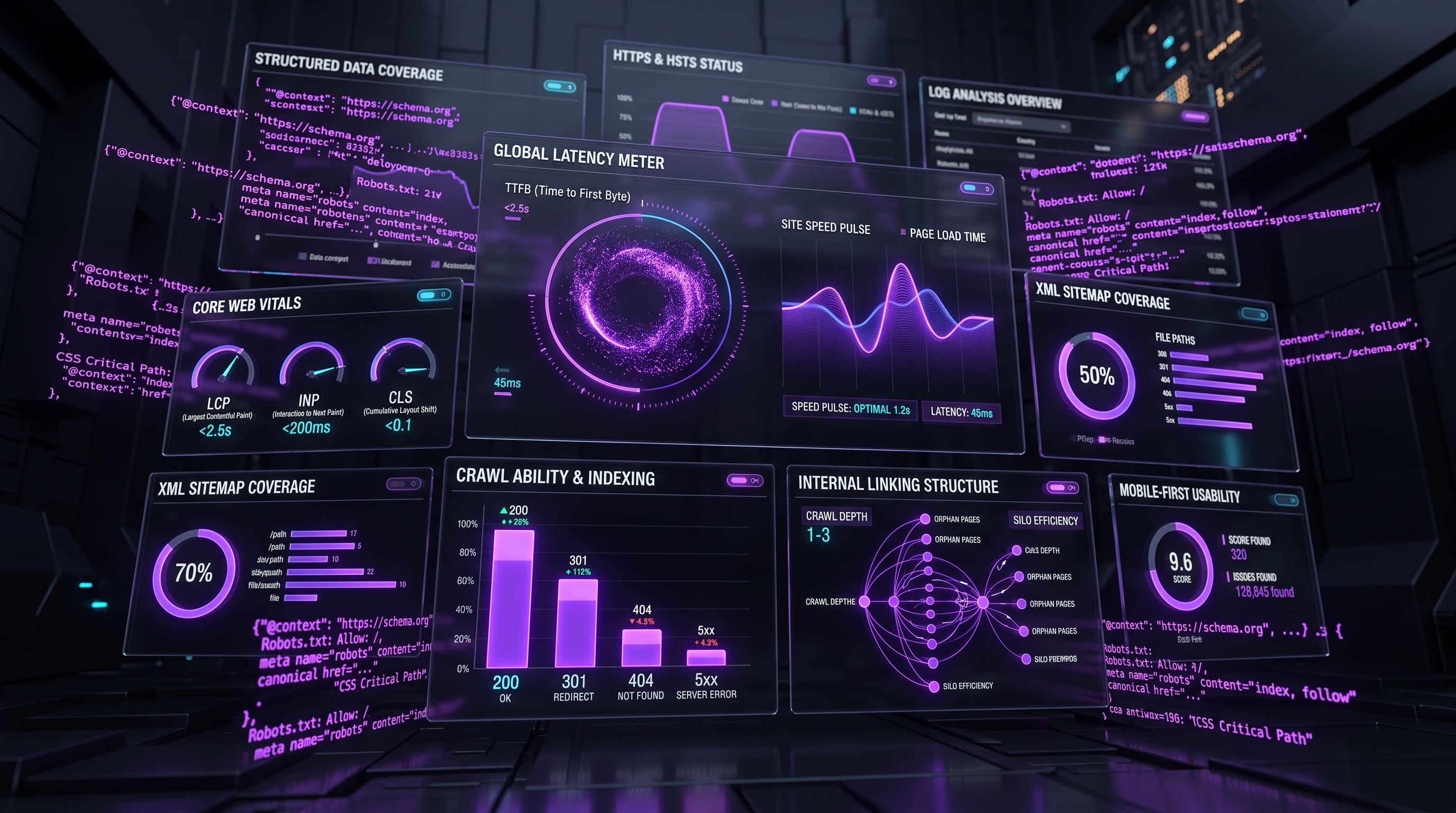
Most commercial SEO audits fail because they rely on automated surface-level tools that scan only meta tags and basic HTTP response codes. When an enterprise platform experiences organic decay or indexing delays, the real cause is rarely visible on the surface layer.
Modern search bots and LLM indexers demand flawless infrastructure. Hidden bottlenecks—such as wasteful crawl budget loops, canonical chain recursion, and unoptimized JavaScript thread execution—silently erode organic yield long before rankings drop.
"Surface audits check if your pages exist. Technical audits examine how search bots parse, index, and render your structural code."
Standard Surface Audits vs. Deep Technical Audits
The table below highlights why enterprise websites require deep log analysis and structural telemetry over basic automated scans:
| Audit Dimension | Standard Surface Scans | Global VA's Technical Protocol |
|---|---|---|
| Crawl Budget Evaluation | Verifies XML Sitemap status | Analyzes raw server log files to track bot hit frequency |
| Canonical Directive Check | Detects missing canonical tags | Identifies recursive canonical loops and parameter splits |
| Rendering Performance | Measures basic HTML load times | Audits DOM complexity, INP latencies & JS execution block |
| Indexing Reliability | Checks Google Search Console summaries | Maps vector proximity and semantic structured schema coverage |
Pillar 1: Crawl Budget Optimization & Log File Analysis
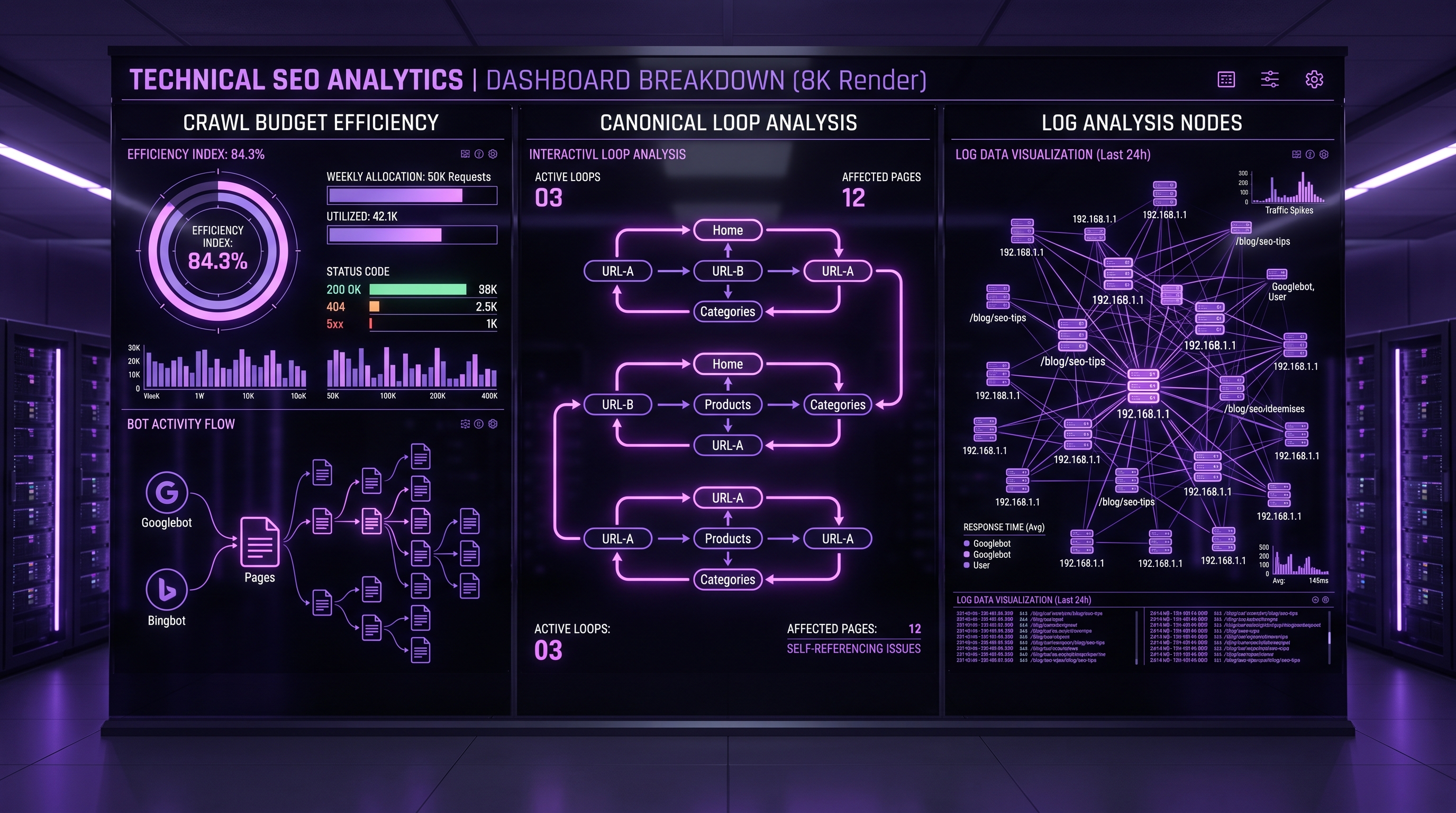
Search engine crawlers allocate a finite amount of computational resources (crawl budget) to every website. If your platform wastes crawler bandwidth on faceted navigation parameters, duplicate HTTP query strings, or broken 302 redirects, high-value conversion pages remain uncrawled for weeks.
By parsing raw server log files, we extract exact user-agent hits, identifying where Googlebot and LLM crawlers encounter dead ends or redundant request loops.
Pillar 2: Canonical Loop Resolution & Parameter Cleanup
Dynamic web applications frequently create thousands of duplicate URLs through sorting filters, tracking parameters, and session tokens. If canonical tags are incorrectly set to self-referential or point in cyclical chains, indexers lower the site's structural authority score.
Pillar 3: Core Web Vitals & INP Refinement
Passing Core Web Vitals in 2026 requires prioritizing Interaction to Next Paint (INP) and Largest Contentful Paint (LCP). Unoptimized JavaScript bundles lock the browser's main thread, delaying user feedback and triggering algorithmic search penalties.
4-Step Engineering Action Plan for High-Yield Sites
- Server Log Audit: Filter server logs by search bot IP ranges to isolate wasted crawl paths.
- Flatten Internal Link Hierarchy: Ensure key transactional pages sit within 3 clicks of the root domain.
- Consolidate Canonical Signals: Enforce strict HTTP header canonicalization across all dynamic parameters.
- Optimize Main-Thread Scripting: Defer non-critical JavaScript to achieve sub-200ms INP responsiveness.
Conclusion: Eliminate Bottlenecks to Maximize Organic Growth
Resolving hidden technical bottlenecks unlocks immediate ranking potential without rewriting your entire content library. Technical precision is the foundation of high-performance digital growth.